Studio Hire for Product Photography in London
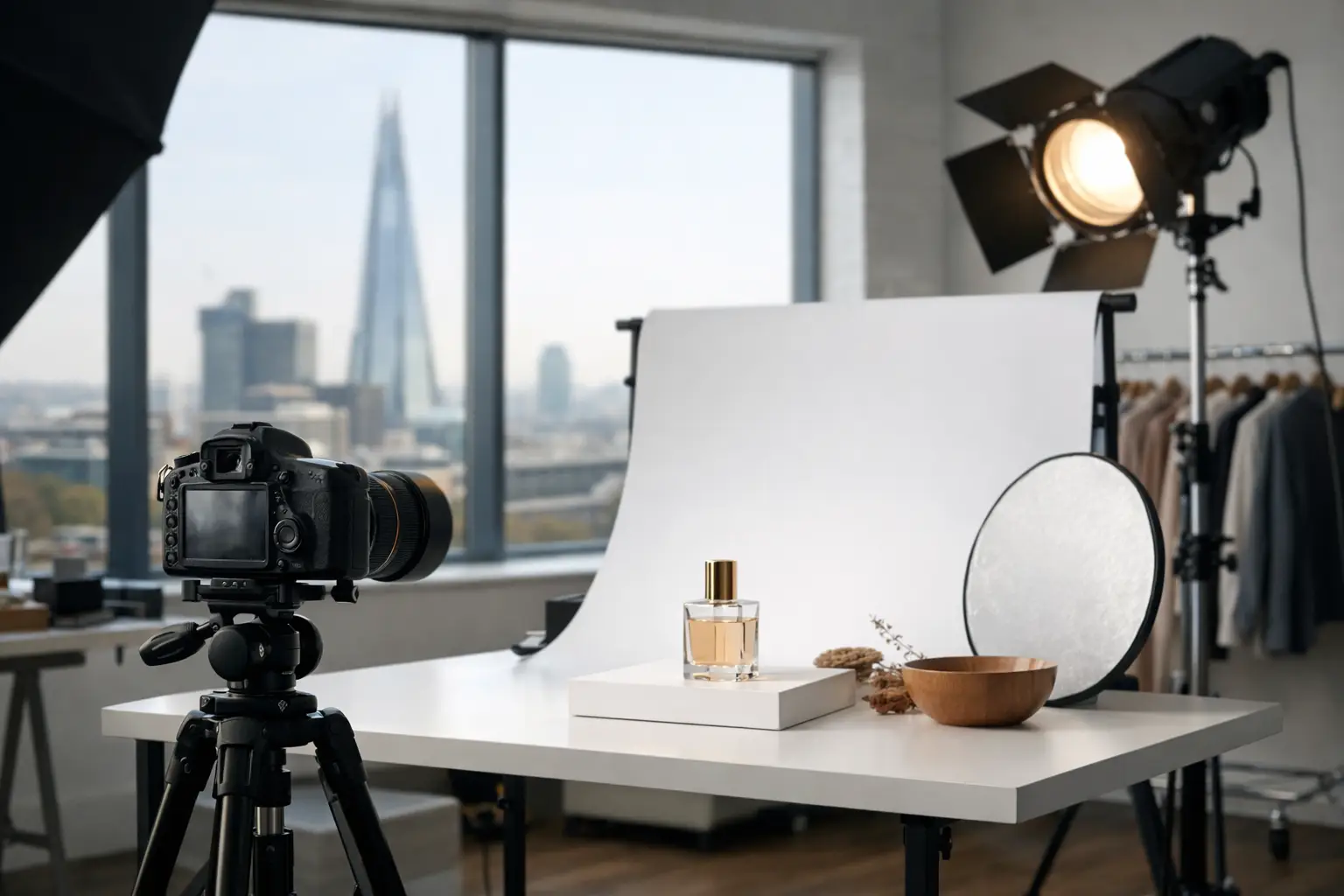
A product shoot can look deceptively simple on a call sheet: a few SKUs, a photographer, a stylist and one day in the studio. The reality is that studio hire for product photography needs to account for delivery access, lighting control, retouching requirements, product prep, client viewing and the room to change direction without losing half the day. Get the space wrong and even a modest e-commerce brief becomes slow, cramped and unnecessarily expensive.
For brands and agencies, the best studio is not simply the one with a clean backdrop. It is the one that gives the crew enough practical control to produce consistent imagery at the required volume, while keeping the workflow moving from load-in to final shot.
Product photography needs more than a white wall
A white background is useful, but it is only one part of a workable product set. Clean cut-out imagery, campaign stills, social assets and motion content all make different demands on a studio. A packshot of a watch may need precise reflections and a controlled tabletop set. A furniture range needs scale, ceiling height and room to place large modifiers. A beauty campaign may require a cove, coloured backgrounds, wet-down effects, prop styling and a separate area for makeup and wardrobe.
The useful question is not whether a studio looks right in a location image. Ask whether it supports the full shot list. That means considering shooting area, ceiling clearance, controllable daylight, power, equipment, storage and the number of people who need to work comfortably on set.
A production-friendly studio also lets the team separate tasks. Products can be unpacked and prepared away from the camera position. The client can review images without standing in the lighting setup. Assistants can build the next scene while the photographer completes the current one. Those small operational advantages protect the schedule and improve the standard of the final work.
Studio hire for product photography: match space to the brief
There is no single ideal studio size. The right choice depends on the product category, the number of setups and whether the shoot includes stills, video or both.
Small products and high-volume e-commerce
Jewellery, cosmetics, footwear, food packaging and consumer electronics can often be shot in a compact footprint. However, a small product does not automatically mean a small production. High-volume e-commerce work needs space for labelled stock, sample management, steaming, cleaning, batteries, tethered capture and a repeatable lighting setup.
For these shoots, consistency matters as much as visual flair. A fully blacked-out studio helps the team control reflections and maintain the same exposure from the first product to the hundredth. A dedicated prep area reduces the risk of products, cases and packaging creeping into the shooting space.
Larger products, lifestyle sets and campaign content
Furniture, bikes, appliances, fashion accessories and larger retail products need more room than their dimensions suggest. Light needs distance to become soft. Backgrounds need clearance. The camera often needs to move further back than expected, particularly when shooting on longer focal lengths to keep proportions natural.
If a campaign requires styled sets, look for a studio that can accommodate set walls, flooring, props and multiple shooting zones. High ceilings and a lighting grid make a genuine difference here. They allow lights to be positioned above the set rather than competing for floor space, leaving the crew free to move around the product safely.
Access is a production cost, not a convenience
London studio hire often looks affordable until transport and handling are considered. If stock, props or equipment have to be carried up stairs, through narrow corridors or across a busy pavement, the crew loses time before the first frame is shot. That can mean additional assistants, longer hire hours and a more complicated strike at the end of the day.
Ground-floor shutter access is particularly valuable for bulky deliveries, pallets, plinths and large products. Drive-in access may be essential for vehicle content, but it is equally useful when a van needs to unload directly into the studio rather than double-park outside. Free on-site parking helps suppliers, clients and crew arrive without adding avoidable costs to the production budget.
These details are not glamorous, but they are the difference between a calm load-in and a rushed start. When a shoot involves a lorry delivery, a set build or several product ranges, access should be confirmed before the studio is booked.
Lighting control creates consistent results
Product photography is often a problem-solving discipline. Glossy packaging reflects everything around it. Glass needs shape without unwanted highlights. White products must retain detail against a white background. Metallic surfaces need carefully placed reflections that describe their form rather than flatten it.
A blackout-capable studio gives the crew control over these variables. It prevents shifting daylight from changing the look of a product halfway through the shot list and makes it easier to match images across several days. For motion work, blackout is just as useful for controlling flicker, exposure and colour consistency.
The equipment offering matters too. Hiring lighting and grip separately can make a lower day rate misleading once delivery, collection and prep time are included. A studio with a substantial in-house lighting and grip inventory can reduce external logistics, particularly where the brief needs C-stands, flags, polyboards, softboxes, boom arms, background support or additional power distribution.
That does not mean every shoot needs a large package. A good facility should support a straightforward tabletop setup without forcing a bigger production than necessary, while still having the capacity to scale when the creative treatment changes.
Build in room for clients, retouching and changeovers
Product shoots rarely stay exactly as planned. A client may want an alternative crop, a different background colour or an extra social format. A stylist may find that a prop combination does not read on camera. A new sample can arrive late and need to be added to the schedule.
The studio should make those changes manageable. Separate client and crew areas, reliable Wi-Fi, comfortable seating, clean facilities and space for a monitor station all help keep approvals moving. For agency-led shoots, this is especially relevant. The set needs to work as a professional working environment, not just a room containing a camera.
When a production is more involved, pre-lighting and pre-rigging can save meaningful time. Rigging key lights before the main crew arrives means the booked shoot day is spent capturing assets rather than assembling the basic setup. It is a practical option for complex lighting, repeat productions and shoots with tight talent or client availability.
Check what the hire actually covers
Before confirming a studio, clarify the operational details that can affect the final cost and schedule. Ask about access times, whether the studio is available overnight, the load-in route, parking arrangements, power capacity, blackout conditions and what lighting or grip is included.
It is also worth checking whether the space can accommodate a set build, whether walls can be painted or dressed, and how the studio handles resets between days. A space with flexible hire hours can be more cost-effective than one with a lower headline rate but rigid access windows.
For teams shooting both stills and motion, ask whether the studio can support each discipline without a full relocation. An infinity cove may suit clean campaign imagery, while green screen, virtual production capability or a buildable area can extend the same production into video assets. Consolidating those needs in one facility reduces the friction of moving stock, crew and equipment between locations.
Cineview Studios is designed around that practical flexibility: a large-scale London facility with high ceilings, a lighting grid, blackout capability, ground-floor access and space for productions that need to grow beyond a basic packshot setup.
Choose a studio that protects the shoot day
The cheapest-looking option is not always the most economical. A cramped space with limited equipment, difficult access and no room for a client area can create overtime, additional rentals and lost shooting time. Equally, hiring an oversized stage for a simple tabletop brief is unnecessary if the workflow does not require it.
Choose the studio around the actual production pressure points: the products being photographed, the volume of assets, the lighting approach, the size of the crew and the likelihood of changes on set. When those requirements are handled properly, the team can focus on detail, pace and image quality rather than finding somewhere to put a case or moving a light for the tenth time.
A good product studio gives a brief room to develop. That is what keeps a tightly planned shoot efficient and gives the creative team enough freedom to make the work better when the camera is up.