Automotive Studio Shoot Space Built for Production
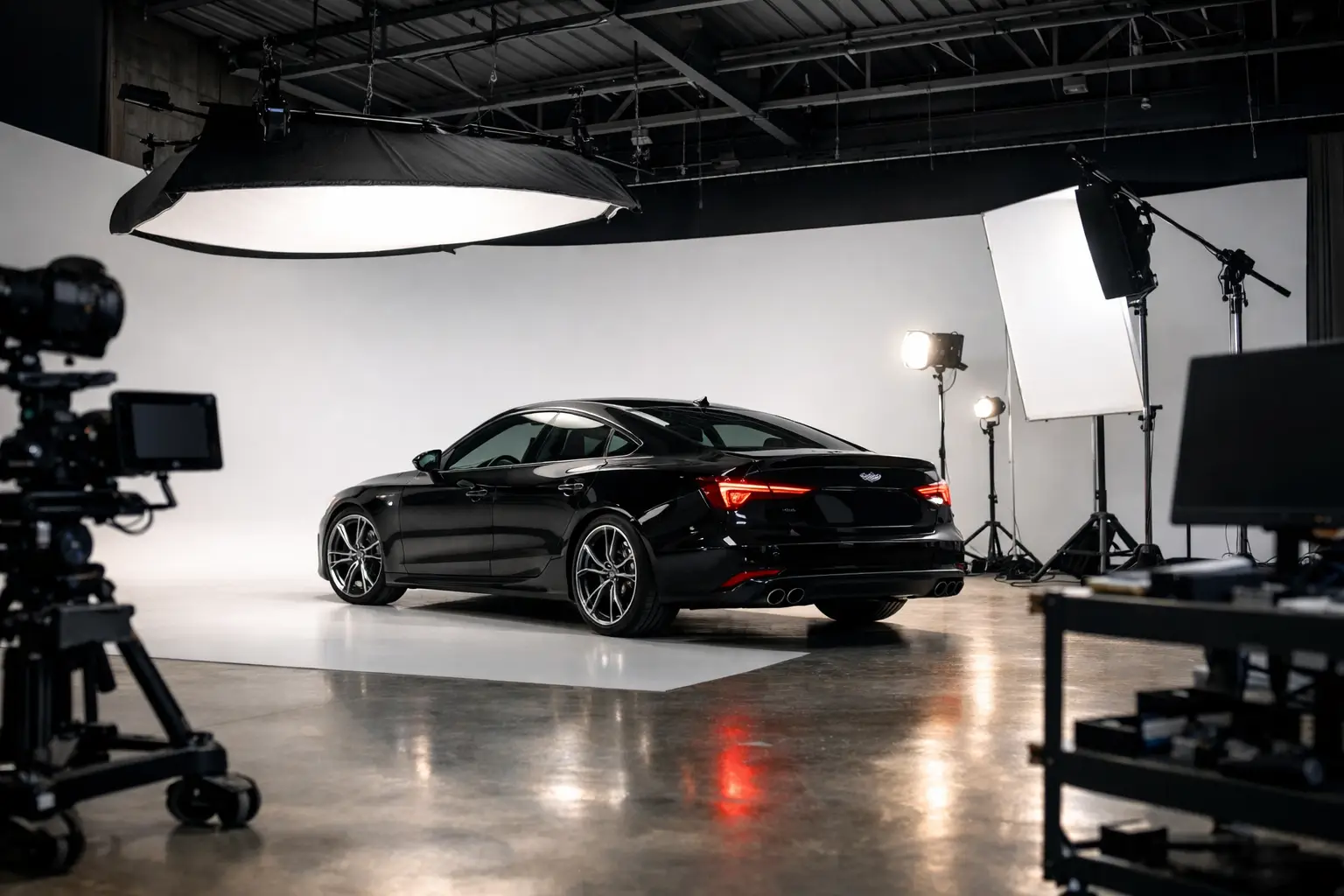
A car can arrive looking immaculate and still lose its impact the moment it enters the wrong space. For an automotive studio shoot, the practical details decide whether the day runs on schedule: vehicle access, ceiling height, controlled reflections, power distribution, room for lighting and a floor that can support the production rather than restrict it.
Automotive work is not simply product photography at a larger scale. The vehicle is reflective, heavy, difficult to reposition and often central to a tightly planned campaign. A studio needs to give the crew enough physical and technical control to shape every panel, window and wheel without compromising the schedule.
What an Automotive Studio Shoot Demands
The first requirement is simple: the vehicle must get inside without becoming a production problem. Ground-floor drive-in access and a wide shutter door remove the need for improvised ramps, tight turns or a lengthy load-in. They also make a meaningful difference when the shoot involves several vehicles, hero cars, specialist equipment or set materials arriving by van or lorry.
Once the car is in position, space around it matters just as much as the footprint beneath it. Photographers need distance for longer lenses. Lighting crews need clearance for large overhead frames, flags, diffusion and reflectors. Art departments need room to dress a set without turning the working area into a bottleneck. A vehicle parked tightly against a wall may be usable for simple content, but it limits camera angles, lighting placement and the ability to create a premium finish.
High ceilings are especially valuable. Automotive lighting is often about producing clean, controlled highlights that travel across the bodywork. Low ceilings force fixtures too close to the vehicle, make large diffusion difficult and introduce unwanted reflections. Height allows the crew to build light above and around the car, then refine the shape with flags and negative fill rather than settling for whatever the room permits.
Light the Car, Not the Room
A successful vehicle image is usually built through reflection management. Paintwork, glass, chrome and glossy trim all reveal the studio environment. If the walls, ceiling, crew or equipment are visible in the bodywork, the image quickly feels less considered.
A blackout-capable studio gives the team a controlled starting point. Instead of fighting daylight changes or exterior spill, the crew can create a consistent lighting environment from the first setup to the last. This is particularly useful for campaign stills, motion plates, launch films and e-commerce content where colour consistency matters across a full vehicle range.
The approach depends on the visual direction. A dark vehicle on a black set can look striking, but it requires careful edge definition to avoid losing the silhouette. A bright, clean look on an infinity cove may suit a configurator-style campaign or editorial asset, though the crew will need to manage floor reflections and preserve detail in white paintwork. Neither option is automatically better. The right choice follows the brief, the paint colour, the intended crop and where the work will appear.
A lighting grid is not a luxury in this context. It keeps fixtures off the floor, preserves access around the vehicle and gives the crew repeatable positions for pre-rigged setups. The result is faster changeovers and a safer working area, particularly when the schedule includes both stills and motion.
Why pre-lighting pays off
Moving a vehicle once lighting is established can affect every reflection in frame. That is why pre-lighting and pre-rigging support are commercially useful rather than merely convenient. A crew can test the key direction, build overhead diffusion, run practicals and assess reflection lines before the client, talent and vehicle arrive.
This does not eliminate adjustments on the day, but it reduces the expensive kind: waiting while a large rig is rebuilt, a cable route is changed or a fixture has to be moved because it blocks a camera angle. On an automotive production, time saved in setup is time available for the details that audiences actually notice.
Choose the Right Background for the Brief
An infinity cove remains a strong option for clean automotive imagery because it removes hard background joins and gives the vehicle a polished, graphic setting. It works well for launch assets, dealer campaigns, social content and brand photography where the car must be the complete focus.
For more cinematic work, a blackout studio provides greater freedom. The team can create a dark, sculpted environment, use controlled pools of light or build practical backgrounds around the vehicle. If the concept calls for a location that would be difficult or expensive to access, green screen or virtual production can expand the available options. The important question is whether the background needs to be captured in camera, added in post-production or displayed interactively for the talent and camera team.
Set-build capability is valuable when the campaign needs more than a neutral backdrop. A garage, architectural façade, charging bay, abstract colour set or stylised interior can be built around the car. This creates greater control than shooting on location, where weather, public access, power limitations and changing light can quickly consume contingency time.
There is a trade-off. A built set offers originality, but it requires enough space for construction, safe access routes and strike time. A simple cove setup is faster and more cost-effective, but the final look depends heavily on lighting, styling and post-production. The studio should support either route without forcing the production into a compromise.
Plan Access, Crew Flow and Client Comfort
Automotive shoots involve more people and equipment than the final image suggests. There may be a photographer or director, DOP, gaffer, lighting crew, digi operator, stylist, art department, agency team, client, vehicle handler and talent. When the studio is cramped, people end up standing in the shot area or moving equipment every time the vehicle needs adjustment.
A production-friendly layout separates the working space from the places people need to review, prepare and wait. Reliable client areas, practical facilities and enough room for monitors make approvals faster and keep the set calm. This is not about adding unnecessary comfort. It is about stopping non-essential movement from disrupting a technically precise setup.
Parking also has a direct effect on the budget. Free on-site parking can reduce load-in time, simplify vehicle handling and avoid the uncertainty of finding space nearby with expensive kit in transit. For early calls, late wraps or multi-day builds, 24/7 access gives the production more control over the timetable instead of compressing every task into standard operating hours.
Build a Practical Automotive Shoot Schedule
The most efficient shoots start with a clear order of operations. Bring the vehicle in after the main rig is safely in place where possible, establish its exact marks, clean it under the studio lights, then shoot priority angles before making major lighting changes. Small repositioning decisions can alter reflections dramatically, so keep the vehicle team, camera and lighting departments aligned before moving it.
Allow proper time for preparation. The car may need tyre dressing, interior cleaning, badge checks, number plate swaps or paint correction before it is camera-ready. If motion is involved, account for repeated takes, sound considerations and the safe movement of crew around the vehicle. A car on set should always be treated as a live production element, not a static prop.
For agencies and brand teams, it is worth agreeing the approval process in advance. Decide who signs off hero angles, which images require immediate retouch checks and whether the client needs a live monitor feed. This avoids pausing a well-built setup while feedback moves between people who are not on the studio floor.
A Better Space Protects the Creative Idea
The best automotive productions look effortless because the studio has removed the predictable friction. The crew can bring the car in cleanly, rig lights where they are needed, control the environment, accommodate clients and keep working when the schedule extends.
Cineview Studios is designed around those realities, with drive-in access, high ceilings, a lighting grid, blackout capability, an infinity cove and the room to support straightforward vehicle content or a more ambitious set build. The practical advantage is not simply having more features. It is having fewer reasons to compromise the shot.
Before booking, walk through the vehicle dimensions, shooting angles, rigging plan and access schedule with the studio team. That short conversation can protect the creative treatment, the crew’s time and the budget long before the first light is switched on.