Best Spaces for Set Construction in London
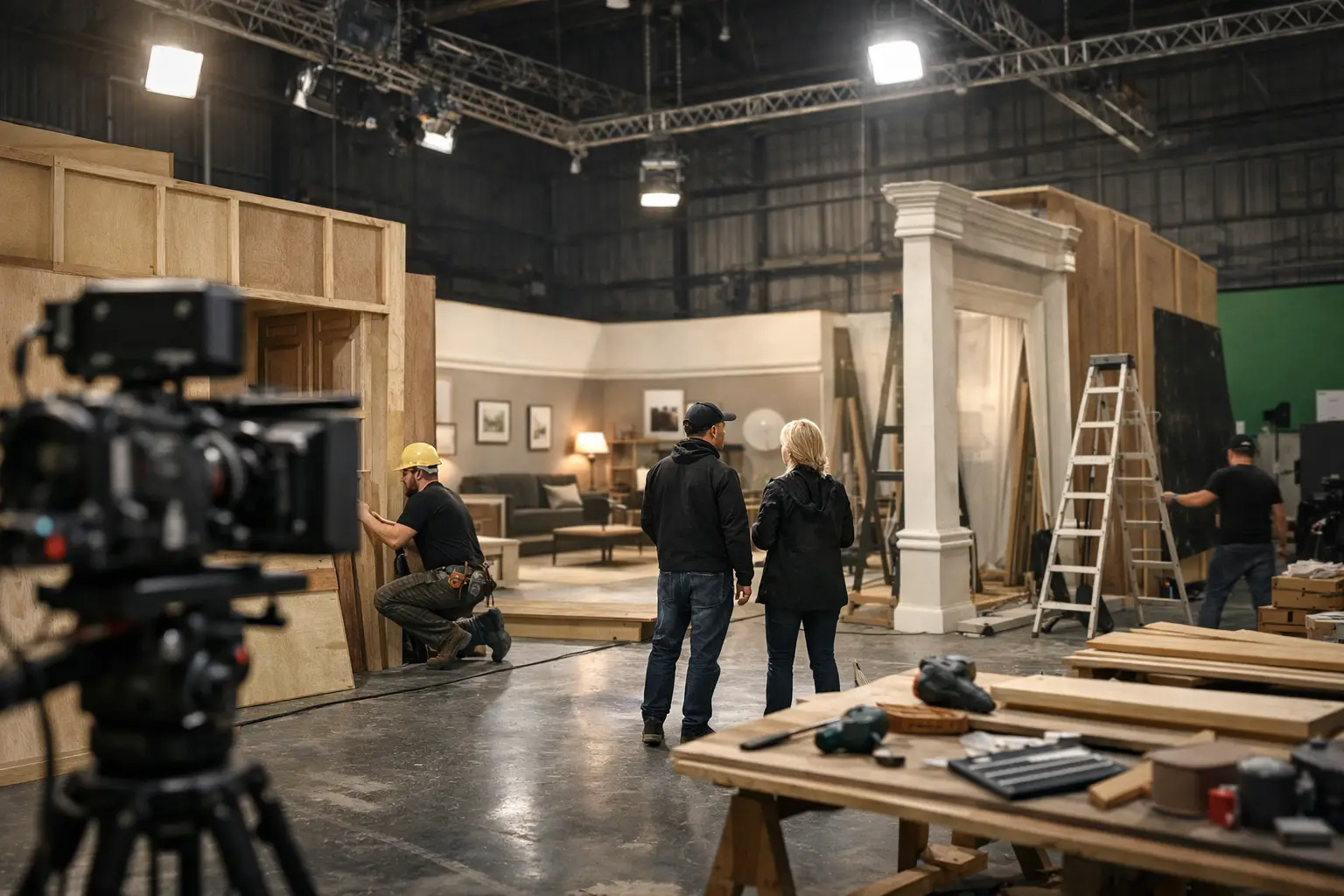
A set build can look perfect on a plan and still fail before the first wall is stood up. The best spaces for set construction are not simply large empty rooms. They give your crew enough height to rig properly, enough access to get materials in without a relay race, and enough operational flexibility to build, shoot and strike without wasting a day on logistics.
For commercials, music videos, branded content, product campaigns and virtual production, the studio is part of the build strategy. Choose a space that works against the production and your art department will spend its time solving avoidable problems: trimming flats in a corridor, carrying scenery through narrow doors, working around fixed restrictions or rebuilding lighting plans because the ceiling is too low.
What the best spaces for set construction have in common
A workable set-build studio starts with volume, not floor area alone. A wide floor is useful, but high ceilings determine what can happen once the build is in place. They allow for full-height walls, overhead lighting positions, negative fill, diffusion and camera angles that do not reveal the top of the set. They also create the clearance required for a practical lighting grid, rather than forcing stands into every shot and every walkway.
Ceiling height becomes even more significant when a set includes windows, door frames, domestic interiors or retail displays. These are familiar environments, so scale matters. A low ceiling can make a room feel compressed on camera or leave nowhere for lighting. In contrast, a higher studio lets the art department build to a believable proportion while the lighting team retains control above the set.
Access is the next non-negotiable. Ground-floor loading and shutter access change the pace of a build. Timber, scenic panels, furniture, props, tools and cases can move directly from vehicle to floor, rather than through passenger lifts or tight shared entrances. For larger productions, drive-in access can be the difference between bringing in a vehicle, oversized prop or full scenic delivery and redesigning the concept around what will fit through a door.
The best studios also treat parking as a production requirement, not a perk. Free, nearby parking gives art, camera, lighting and production teams somewhere practical to unload and return to throughout the day. It reduces the risk of delayed deliveries, avoids loading penalties and makes a late change less expensive than it would be at a central location with restricted access.
Build time must be bookable time
Set construction rarely fits neatly into a single shoot day. Scenery needs to be measured, assembled, painted, dressed, adjusted and approved. Lighting often needs a pre-rig, especially where the build has practicals, multiple camera positions or a demanding lighting treatment.
A studio that can accommodate pre-lighting and pre-rigging gives departments room to work in sequence rather than on top of one another. The art team can finish walls and dressing before the lighting team finalises positions. Camera can test sightlines before the client arrives. That separation protects the shoot day, when time is at its most valuable.
Flexible hours matter for the same reason. A 24/7 studio gives crews the option to build overnight, shoot early or strike after wrap without compressing every task into a standard daytime booking. It is not always necessary, but it is extremely useful when agency approvals, talent schedules or delivery deadlines are tight.
Space features that affect the final frame
Not every build needs a full scenic environment. Some productions need a single hero wall, a product plinth, a stylised corner or a controlled surface for clean e-commerce imagery. The right studio should support straightforward setups without making you pay for complexity you do not need, while still being capable of a larger build when the brief changes.
An infinity cove is valuable where the set needs to disappear into a clean background or where a product, fashion or beauty shoot needs a polished finish with minimal post-production. A blackout area offers the opposite advantage: total control over ambient light. This is particularly useful for automotive content, projection, music videos, dramatic lighting and shoots where daylight variation would slow the day down.
Green screen capability matters when the physical build is only one layer of the final scene. It can support extensions, compositing and digital environments, while virtual production capability can bring real-time backgrounds and interactive light into the studio. These features are not a replacement for set construction. Used well, they allow the physical foreground, props and talent interaction to carry the reality while the digital element expands the world beyond the studio walls.
Power, rigging and equipment availability are equally practical concerns. Hiring a space with lighting and grip already on site can reduce transport, hire costs and the time spent waiting for third-party deliveries. More importantly, it means the equipment has been selected for the room. A studio with a lighting grid and a credible in-house inventory gives the gaffer more options and keeps the floor clearer for the set, crew and client viewing area.
Choosing a London studio without paying for friction
London studio hire can become expensive quickly, especially when the initial rate excludes the practical conditions required for a build. A cheaper room can cost more once you add external lighting, parking, overtime, porters, storage, access workarounds and the crew hours lost to an awkward load-in.
Assess the whole production cost, not the headline day rate. Ask whether the quoted space includes the working essentials: access for deliveries, sufficient power, usable ceiling height, a clean build floor, parking, blackout control and support during the booking. If a studio has restrictions on construction materials, painting, fixing into surfaces, noise or overnight work, establish them before the art department has committed to a design.
It is also worth considering how the studio will feel when clients arrive. A serious production space needs room for the crew to operate, but it should also provide a professional base for directors, agency teams and brand stakeholders. When a client can see an organised set, controlled lighting and a calm working floor, approvals tend to happen faster. That is not cosmetic. It directly protects the schedule.
Cineview Studios is designed around these operational realities, with a large ground-floor production environment, high ceilings, a lighting grid, drive-in access, free parking and flexible facilities for set builds, blackouts, green screen and virtual production. The point is not to add features for their own sake. It is to remove the familiar London compromises that force production teams to choose between scale, access and budget.
Questions to ask before you confirm the studio
A site visit is the safest way to assess a set-build space, but a clear technical conversation can identify problems early. Confirm the usable floor dimensions rather than relying on headline square footage, and ask for the ceiling height at the position where the set will stand. Check whether the grid can take the intended lighting approach and whether there is enough clearance for boom arms, diffusion frames and camera moves.
You should also establish loading times, shutter dimensions, vehicle access and where deliveries can wait if they arrive early. If the build includes heavy scenery, ask about the floor loading and whether there are restrictions on cutting, painting, drilling or using haze. For larger jobs, clarify storage options between build and shoot days, as moving a finished set off site can introduce damage and unnecessary labour.
For a useful pre-booking check, make sure you can answer these five questions:
- Can the largest scenic element, prop or vehicle enter the studio without dismantling?
- Is there enough ceiling height to build at the required scale and still light from above?
- Can the art, lighting and camera departments work in the space without blocking one another?
- Does the booking allow enough time for construction, pre-light, client review and strike?
- Are access, parking, power, equipment and overtime costs clear before the budget is signed off?
The answers will tell you far more than a gallery of empty-room photographs. A construction-friendly studio is one where every department can make progress at once, not one where the production merely fits inside the walls.
When the brief calls for a built world, protect the build before the first sheet of timber is ordered. Choose a studio that gives the crew space to construct properly, light with intent and keep the shoot moving when the inevitable last-minute change arrives.